
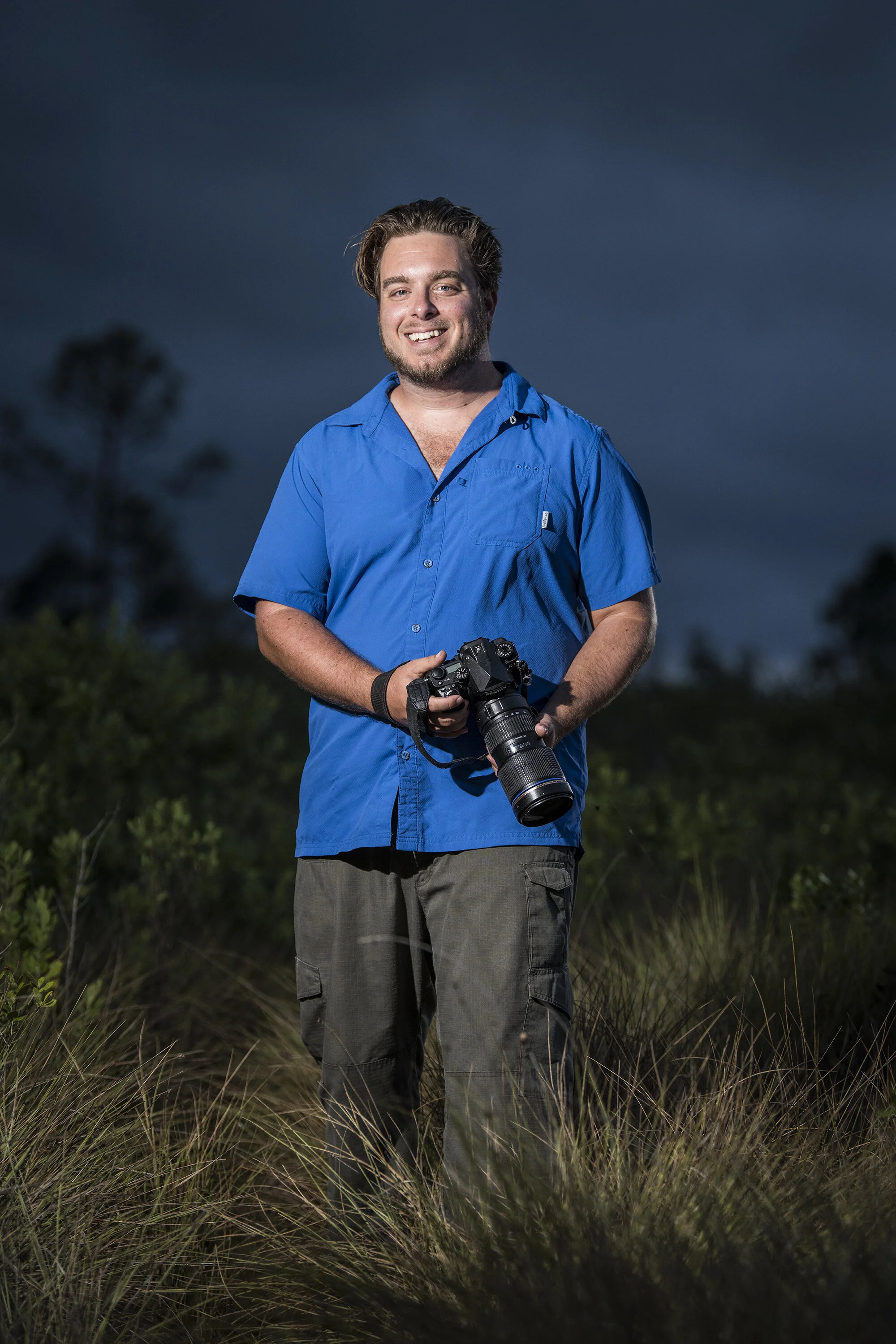
Dustin Angell, photo by: Bill Parken
Dustin Angell is a science and conservation interpreter and conservation photographer. As Archbold Biological Station’s Program Director of Education, he oversees educational outreach activities for multiple audience types and works with educators and scientists across North America. Dustin is a former President of the League of Environmental Educators in Florida and a recipient of the Outstanding Educator Award from the Florida Chapter of the Wildlife Society. Dustin’s photography highlights careers in science and environmental stewardship. He is currently studying environmental social sciences as a graduate student at Athabasca University.
Florida Stewards Project
I moved to Florida in 2013 to work for Archbold Biological Station as an educator and environmental interpreter. Archbold is a science and conservation organization in the Headwaters of the Florida Everglades, a 2.6 million acre region that stretches from Orlando to Lake Okeechobee. After arriving, I was immersed in a social community based on science and environmental conservation. This included co-workers as well as people from other non-profits and agencies. Daily contact and behind-the-scenes access led me to an important recognition in the fall of 2014: I was in a remarkable position to photograph this community. 10+ years later, the project continues to grow.
This photo project aims to document the people, places, and careers related to conservation in the region. To that end, the subjects each pose in their field clothes while holding the tools they use. Most subjects are wildlife biologists or ecological researchers of some kind, but others are land managers, artists, archeologists, volunteers, and educators. They pose in the outdoor spaces where they work. Due to the essential role that place has in defining the identity and activities of the community, these settings are subjects, too. They include: grasslands, scrublands, pinelands, ranchlands, wetlands, and others.
Many elements of the portraits, like setting and lighting, postures and expressions, and even the angle I photograph from (usually kneeling on the ground) are intended to highlight the heroic aspects of the subjects. After all, these stewards spend hundreds or thousands of hours in Florida’s hot and humid interior. They slog through wetlands and rainy-season floods, and share the land with mosquitos, venomous snakes, and alligators. They operate chainsaws while high in pine trees, direct landscape-scale prescribed fires, and drive off-road in trucks, ATV’s, and swamp buggies.
Ultimately, I wish for future generations of Floridians to share and pass along a home that is alive with wild places and healthy ecosystems. These portraits are for them: a reminder of the community of people who, at a critical time in our history, oriented their lives and careers toward the stewardship needed to deliver that future.